
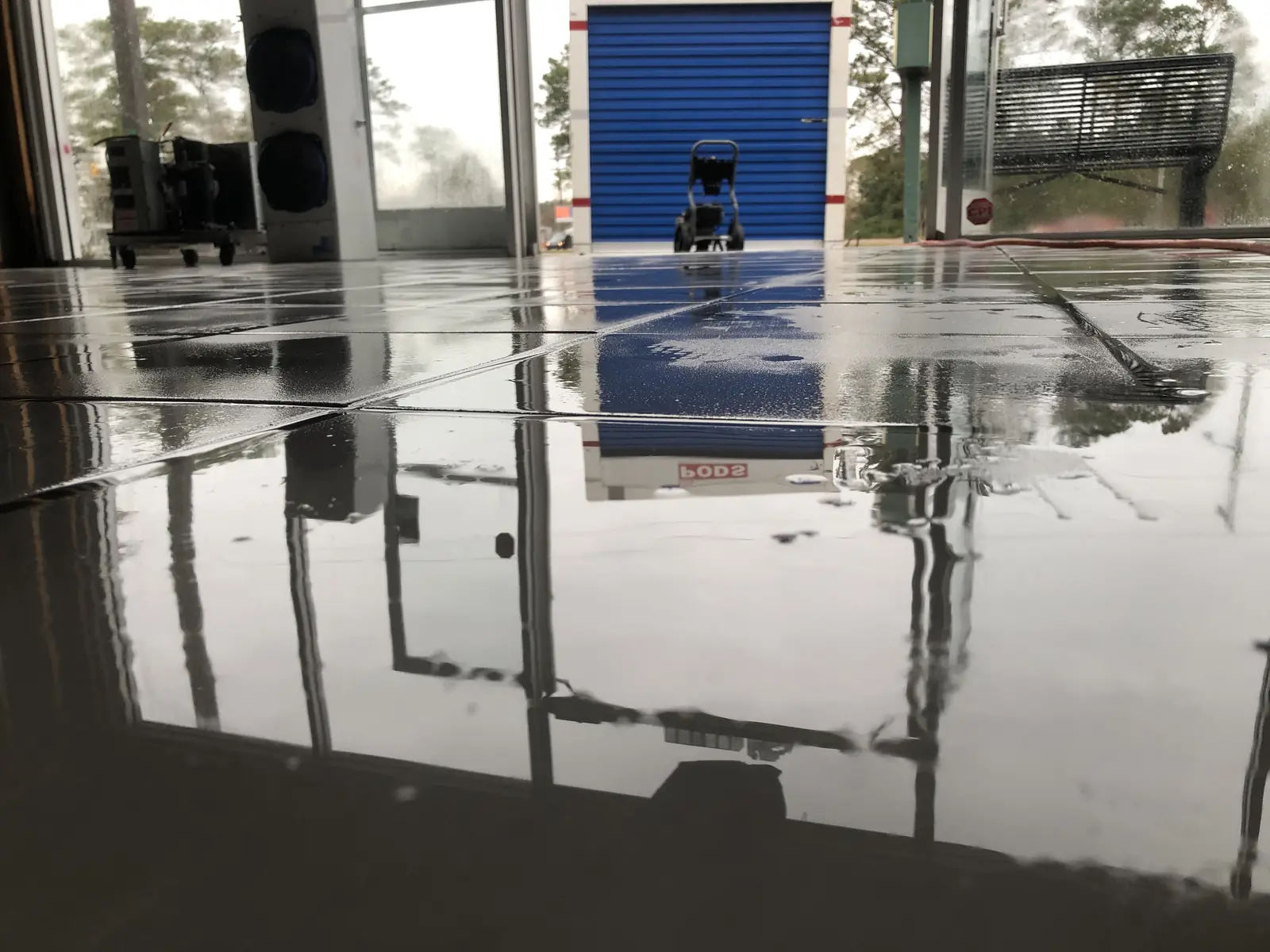
The short answer: Shut off the water at the main valve, turn off power to any wet area if you can do it safely, move valuables out of the water, take photos, then call a water damage restoration company and your insurer. The first hour decides how much of the floor, drywall and furniture can be saved.
Shut off the water first
Everything else waits. Find the main shut-off valve. In most Central Oregon homes it’s in the crawl space, the garage, or where the water line enters the house near the front hose bib. Turn it clockwise until it stops.
If you’ve never looked for your main valve, you’re in excellent company. (We’d estimate most people meet theirs for the first time while standing in an inch of water.) Go find it this weekend, while your socks are dry.
Make it safe
Water and electricity are a bad pairing. If water is near outlets, power strips or an appliance, turn off that circuit at the breaker panel, but only if you can reach the panel without standing in water. If you can’t, leave the house and call for help.
Wet floors are slippery. Slips and falls are the most common injury after a leak, so walk, don’t run, and keep kids and pets out.
Save what you can, then take photos
Lift rugs, move electronics, pull boxes off the floor and get photos, documents and anything irreplaceable somewhere dry. Put foil or plastic under furniture legs so stains don’t transfer into the carpet.
Then photograph everything: the source of the leak, the water on the floor, damaged items. Your insurer will want pictures, and your phone is already in your hand.
Call a restoration company, then your insurer
You don’t have to wait for the insurance company before stopping the damage. Most policies expect you to prevent further damage, and fast drying is the cheapest way to do that.
When you call us at 541-797-4233 we’ll ask where the water came from, how long it ran and what’s wet. Then we come out, measure, and start extraction.
- Where did the water come from? (Supply line, appliance, toilet, drain, roof)
- Roughly how long did it run?
- Which rooms and floors got wet?
- Is anything under the wet area, like a crawl space or a lower floor?
Don’t trust the fans
Box fans and an open window feel productive. They dry the surface you can see. They don’t touch the water inside a wall, under the vinyl or soaked into the subfloor, which is where the long-term damage happens.
Restoration crews use moisture meters to find that hidden water and dehumidifiers to pull it out of the building. It’s less dramatic than a shop vac and a lot more effective.
What happens over the next few days
Expect drying equipment for three to five days, a daily visit to read moisture levels, and some noise. Once everything reads dry, repairs start: drywall, paint, flooring. Your adjuster will look at the scope and approve the work.
And somewhere in there, you’ll go find that main shut-off valve again just to say hello. Everyone does.
Need help now? Call 541-797-4233, any hour, or read about our water damage restoration service in Bend.